

Definition
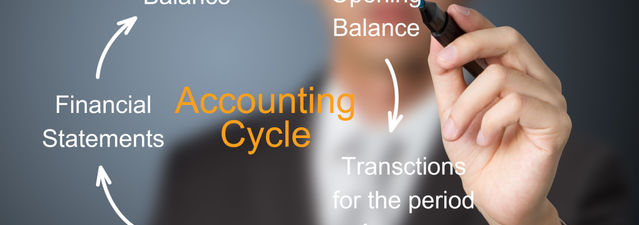
The term accounting cycle refers to the framework and processes followed in each accounting period. The accounting cycle begins with the identification of events and transactions, and ends with the after-close trial balance.
Explanation
The accounting cycle is a conceptual framework that describes the process a company goes through each accounting period. While the exact number and description of the steps in the cycle is somewhat subjective, the core processes include:
Journalization of Transactions: identification of events and transactions as they occur and recording them using the proper journal entry.
Posting to Ledger: transferring the journal debits and credits to the proper ledger accounts.
Trial Balance and Adjustments: includes the preparation of various worksheets to prove debits equal credits, and perform adjusting entries such as accruals.
Preparing Financial Statements: assembly of accounting information to construct the company's balance sheet, income statement, and statement of owner's equity.
Closing Accounts: reducing the balance of temporary accounts to zero in preparation for the journalization of transactions associated with the next accounting period.
After-Close Trial Balance: following the closing of accounts and adjustments, this step proves that debits are still equal to credits.
An illustration of the accounting cycle appears below:
Related Terms
 The accounting industry generates billions of dollars. Accounting industry statistics indicate the size of the accounting industry was $544.06 billion in 2020. It gives us an idea of how many accounting events and transactions occur every day in the world.
 Moneyzine EditorNovember 6th, 2024
 The financial accounting term journalization is used to describe the process of recording transactions and events. Journal entries are usually chronological lists of debits and credits to accounts, along with a description of the transaction.Moneyzine EditorJanuary 23rd, 2024
- The financial accounting terms real and nominal refer to permanent accounts that appear on the balance sheet (real) as well as temporary accounts that appear on the income statement (nominal).Moneyzine EditorSeptember 21st, 2023
- The financial accounting term posting to the ledger refers to the process of analyzing the credits and debits appearing in journal entries, and recording those transaction amounts in the proper accounts found in the company's general ledger.Moneyzine EditorSeptember 20th, 2023
- The financial accounting term reversing entry refers to the post-financial close process that involves the reversing of adjusting entries prior to the start of the next accounting cycle. The most common examples of reversing entries include those for prepaid items and accruals.Moneyzine EditorSeptember 21st, 2023
- The financial accounting term trial balance refers to a listing of all accounts found in the company's general ledger, along with the balance found in each account. Companies conduct both an unadjusted and post-closing trial balance as part of the accounting cycle.Moneyzine EditorNovember 6th, 2024
.png) The accounting term financial close refers to the process of reducing the balance in nominal accounts, such as revenues and expenses, to zero. The close is part of the accounting cycle, and is necessary to prepare these temporary accounts for the next period's transactions and events.Moneyzine EditorJanuary 18th, 2024
The accounting term financial close refers to the process of reducing the balance in nominal accounts, such as revenues and expenses, to zero. The close is part of the accounting cycle, and is necessary to prepare these temporary accounts for the next period's transactions and events.Moneyzine EditorJanuary 18th, 2024


.png)